If you notice a film or mark after using a shower steamer, identify your shower's surface before choosing a cleaner. Follow the care instructions for that material and finish. A method suitable for one shower base may be unsuitable for stone, grout or a coated surface beside it.
Do not stand on a slippery area while trying to inspect or scrub it. Keep the shower out of use until you can address the issue with secure footing. This guide helps you choose the next check; it does not diagnose a stain from its appearance or promise that every mark will wash away.
Record what you can see before changing anything
Notice where the mark is, when you first saw it and what you used in the shower. Was it directly under the tablet, along the route water takes or elsewhere? Is there still a visible piece of product?
A pale film, a darker patch and a dull area are descriptions, not diagnoses. Their appearance alone cannot establish the cause or tell you which chemical to apply.
Take a photo before cleaning if you may need help from the product seller or surface manufacturer. Record any cleaner you have already used. That history is more useful than trying several products and then attempting to reconstruct what happened.
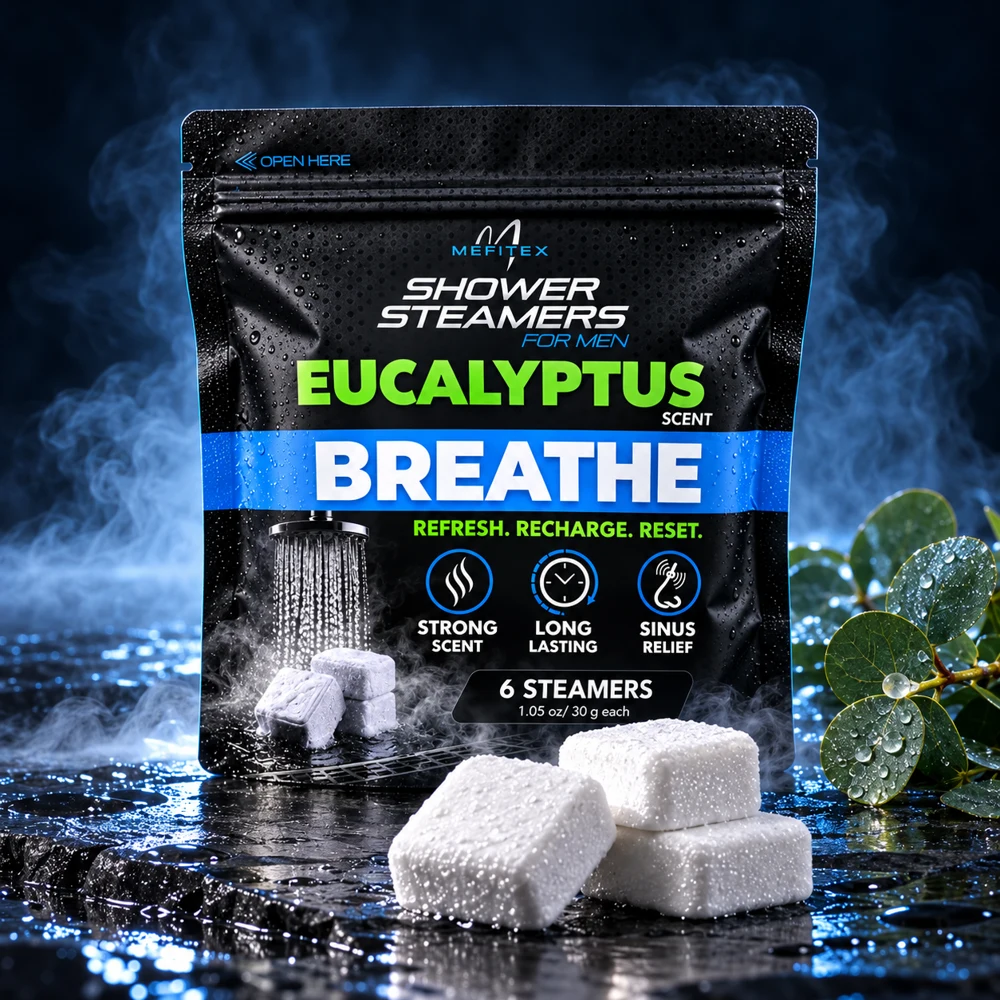
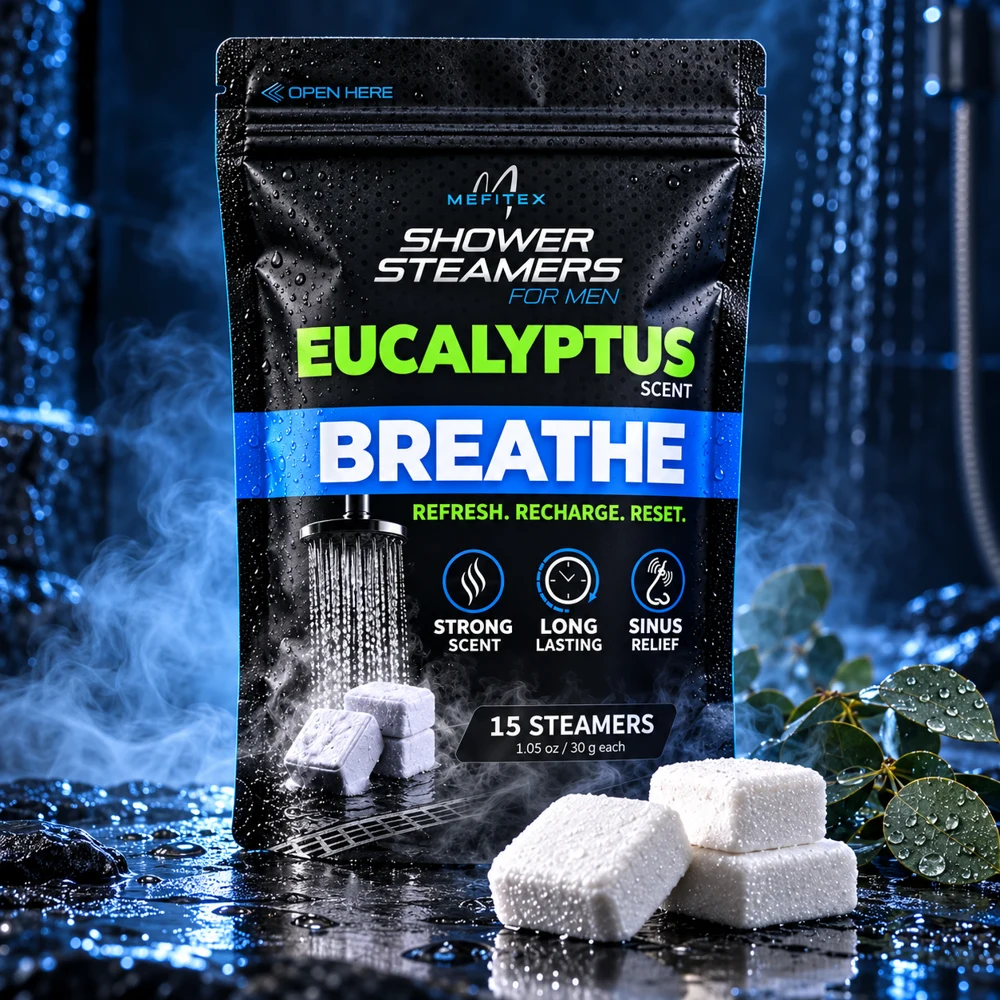
Keep the shower-steamer pouch and directions available. This article does not infer a formula from a tablet's color or assume that every brand leaves the same type of residue.
Identify the base, tile and surrounding materials
Look for the shower model, installation paperwork or information from the installer. Confirm whether the affected area is a manufactured shower base, ceramic or porcelain tile, natural stone or another material.
Check the finish too. A refinished base or treated glass may have care instructions that differ from those for the original surface. If you rent, ask the property manager rather than guessing.
Treat grout, sealant and nearby fittings as separate parts of the installation. A cleaner approved for a tile face is not automatically suitable for everything it touches.
Once you know the material, find the current care guide for the specific product. The manufacturer examples below illustrate why that step matters; they are not interchangeable recipes for all showers.
For a STERLING Vikrell shower, follow Vikrell guidance
STERLING's Vikrell care page recommends a damp soft cloth or sponge and excludes abrasive brushes and scouring pads. It also cautions against bleach on decorated Vikrell surfaces.
Use the care instructions and recommended cleaner for your particular STERLING product, including any directions for testing an unfamiliar area. Do not extend Vikrell guidance to a different manufacturer's acrylic or fiberglass base simply because it looks similar.
The linked STERLING page also discusses drain treatments. Those are separate instructions for a drain problem, not directions to pour drain cleaner onto a shower floor.
For ceramic or porcelain tile, check the grout too
Daltile's ceramic and porcelain guidance calls for cleaners suitable for the tile installation, including grout. Follow the cleaner's stated dilution and contact time, then rinse as directed; avoid assuming that a stronger concentration will work better.
Daltile also warns that cleaning residue can affect slip resistance and recommends removing it thoroughly. A floor that looks cleaner should not be left with a slick cleaner film.
These are material-care instructions, not evidence that a particular cleaner has been tested against MEFITEX residue. For another tile brand, use its own care guide and the grout manufacturer's directions.
For natural stone, skip the vinegar shortcut
Daltile's natural-stone guide recommends pH-neutral cleaners made for stone, with use governed by the cleaner's instructions. It advises against acids and bleach and warns that even diluted vinegar can etch many stone varieties.
If you have marble, limestone, travertine or another stone installation, confirm the stone and any sealer before applying a product. Do not treat a household vinegar recipe as a universal shower-cleaning method.
A change in the finish may need advice from the stone supplier or installer rather than another attempt with a different cleaner. This guide does not prescribe polishing, stripping or resealing a shower.
When the material or finish is unknown
Pause before using a chemical cleaner, scraper, abrasive pad or improvised cleaning mixture. Ask the manufacturer or installer what the surface is and what care method is permitted.
For glass, coated doors, refinished bases and other materials not covered here, obtain their specific instructions. A product sold as a bathroom cleaner still needs to be compatible with your installation.
Use one approved method according to its label. Do not combine cleaning chemicals or layer another product over an unresolved first attempt. Follow the stated ventilation and protective-equipment instructions.
If a mark remains after the approved cleaning method
Stop escalating the treatment if the surface appears dull, discolored or otherwise changed, or if the approved method does not resolve the problem. Send the surface manufacturer a photo, the model or material information and a record of the products used.
Contact the shower-steamer seller separately with the product name, order details, packaging information and a description of the use. For MEFITEX, email support@mefitex.us.
The two contacts answer different questions: the surface manufacturer can advise on its finish, while the product seller can help identify the steamer and review the product concern. Neither should have to guess which cleaner has already been applied.
Avoid resuming use on the affected area while a compatibility or footing concern remains unresolved.
Check the setup before your next use
After the surface issue is resolved, review the shower-steamer directions and any restrictions from the shower manufacturer. For MEFITEX, start with one tablet, removing all the white paper and the label before placing it in the shower.
Choose a spot beside the main stream where light splashes reach it, clear of the drain and your walking path. This placement guidance does not guarantee that every shower surface is compatible with every product.
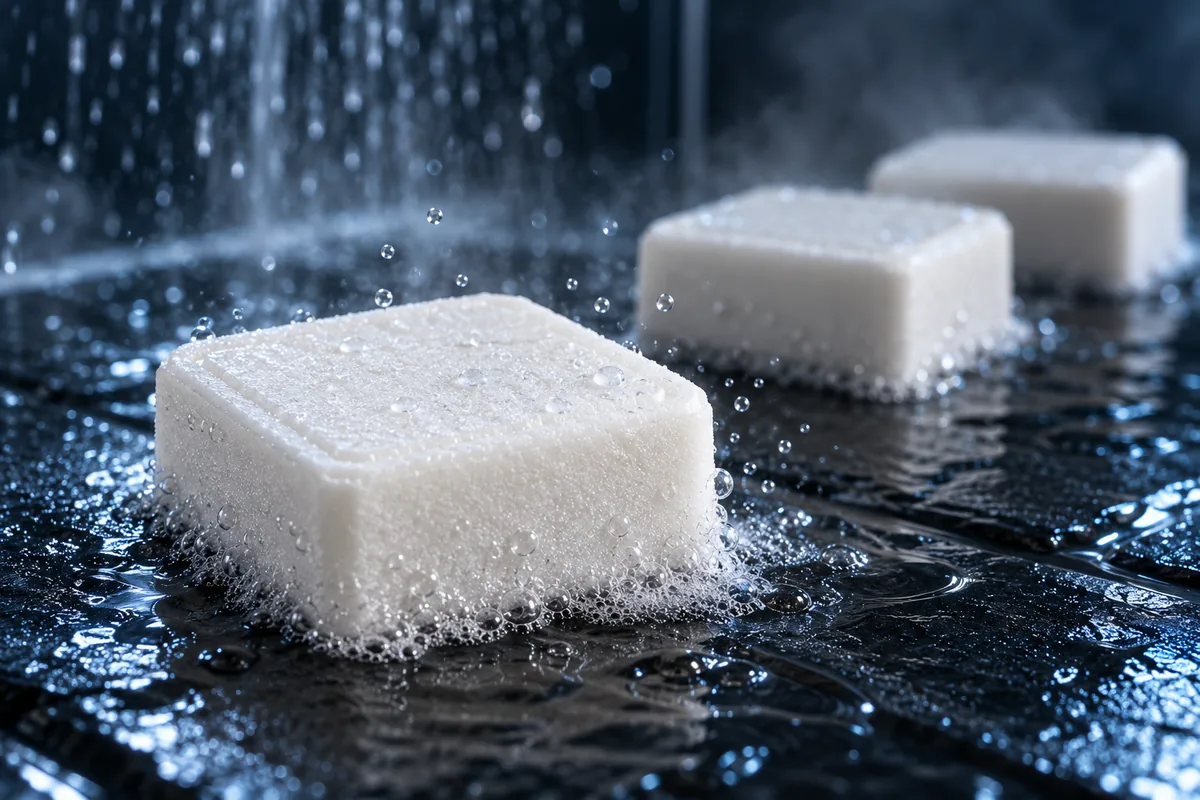
The cover is an AI-generated illustration of unwrapped tablets activating in water, not a demonstration of residue removal. Several tablets appear as an artistic composition; they are not the recommended amount for one shower.
Frequently asked questions
Does a white mark prove the steamer caused it?
No. A description or photo alone does not establish the cause. Note the timing, location and products used, then seek advice appropriate to the surface.
Can you use vinegar to remove shower steamer residue?
Do not use it as a universal fix. Daltile warns that vinegar can etch many natural stones. Follow the care instructions for your actual material and finish.
Should you scrub harder if a mark remains?
Do not escalate to abrasives without permission from the surface manufacturer. STERLING specifically excludes abrasive brushes and scouring pads for Vikrell.
Does this guide promise MEFITEX is residue-free?
No. It provides a material-specific decision process and support contacts, not a universal performance or surface-compatibility guarantee.
Further reading
STERLING: How to clean and care for Vikrell baths and showers